Denim Bio Stone Washing: Cutting Pumice With a Cellulase Route
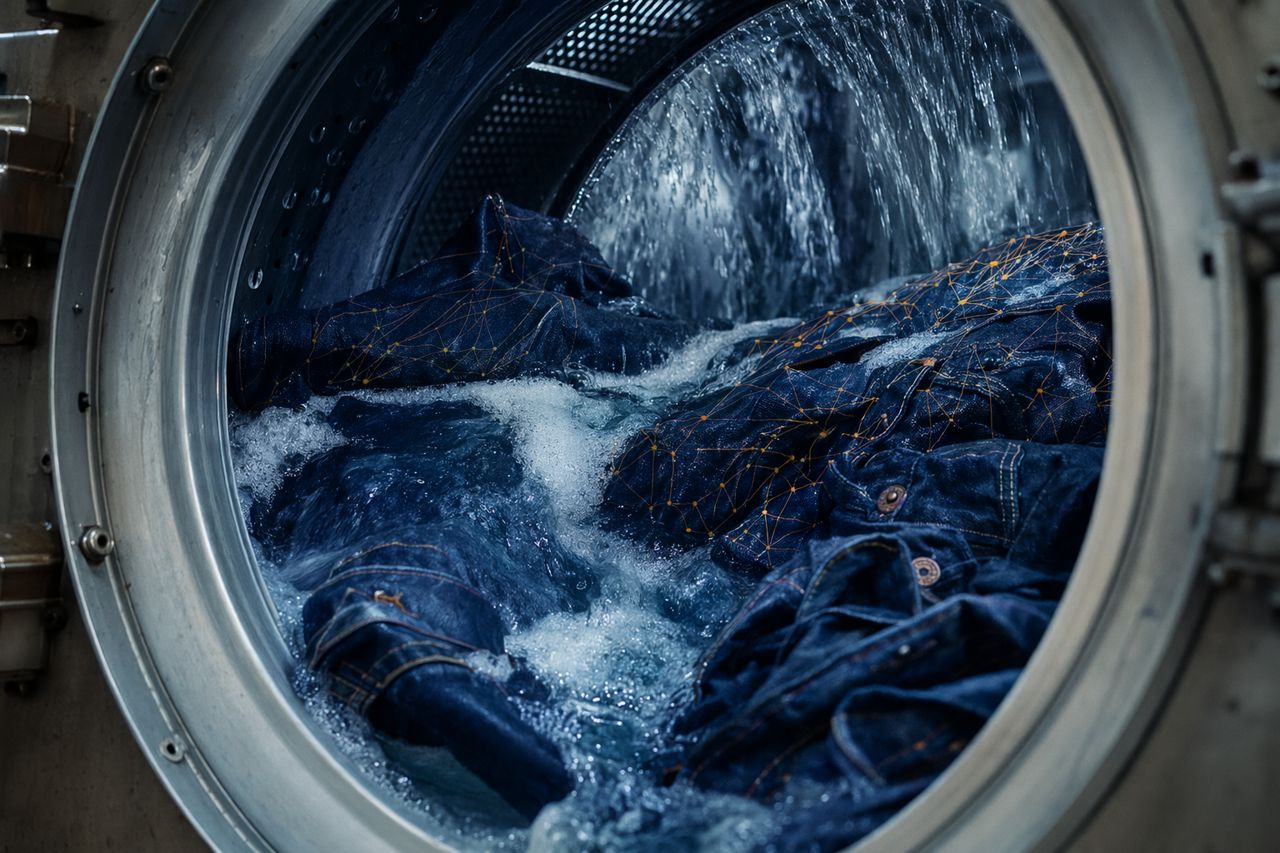
Pumice wears machines, marks pockets and leaves grit in the drain. Bio stone washing moves the abrasion job to a cellulase blend, so a denim laundry can reduce stones or run without them, keep the contrast its buyers approved, and repeat the look lot after lot.
Enzymeszone supplies denim laundries, garment wash houses and textile auxiliary distributors that buy for production. Pack sizes, quantities and delivery are quoted per order.
For laundries, wash houses and resellers. To get a quote, send the product or wash route, the quantity you need and the destination country. Request a quote
How a pumice-replacement enzyme blend works on the wash floor
A pumice-replacement blend combines a concentrated low-temperature cellulase with a cold bleaching enzyme, a buffer and a surfactant in one powder. It is used on denim, cotton, linen and Lyocell, it replaces pumice in the enzyme wash of denim garments, and it also polishes cotton twill.
What the laundry sees on the garment:
- A clear fabric surface with strong contrast and less fuzz
- Better drape and a smooth, slick handfeel
- Fast flower development with large spots
- Low fiber damage
- Fewer stones, or none, and a faster route
The pumice-saving business case
A small extra addition of the blend replaces a large load of pumice; the exact ratio is confirmed by trial in your own machines. That lowers production cost and has a clear environmental benefit: less stone to buy, carry, sieve out of seams and pockets, and send to the drain.
Typical working window for a low-temperature blend
| Setting | Typical value | What to confirm on your load |
|---|---|---|
| Dose | Set per number of garments in the load | Garment weight, drum loading, target contrast |
| Treatment time | 15-60 minutes | Stop point against the approved standard |
| Temperature | 25-45 °C | Your steam and heat-up profile |
| pH | 6.5-7.5 | Water quality and buffer carry-over |
| Enzyme stop | Add anhydrous sodium carbonate to raise the pH to 10, heat to 80 °C and hold for 10 minutes | Fits your rinse and neutralization sequence |
Handling in the dosing area
Keep the powder away from light in a cool, dry and ventilated store, below 30 °C, and close every opened drum or bag tightly so the product keeps its activity. Enzyme dust can cause allergic reactions, so operators wear protective clothing, gloves and eye or face protection when dosing.
Shelf life and drum size are stated for each lot and quoted per order; ask for both with the quotation.
Route planning starts with the finish target
Bio stone wash is a route decision. The right enzyme path depends on the garment, fabric construction, shade standard, equipment, and how much mechanical abrasion you want to keep in the drum.
Before quoting, Enzymeszone looks at the production variables that drive denim wash performance:
- Fabric weight, weave, stretch content, and indigo depth
- Garment construction, seam bulk, pocketing, and hardware load
- Required abrasion level at seams, whisker zones, thighs, and panels
- Target cast, contrast, and shade window
- Backstaining sensitivity on pockets, weft, labels, and light panels
- Drum loading, liquor movement, temperature flexibility, and cycle time
- Current stone loss, sludge handling, machine wear, and rewash rate
The output is a practical cellulase route, not a lab-only recommendation.
Comparing pumice, cellulase, hybrid, and low-stone routes
| Route | Best fit | Operational value | Watch points |
|---|---|---|---|
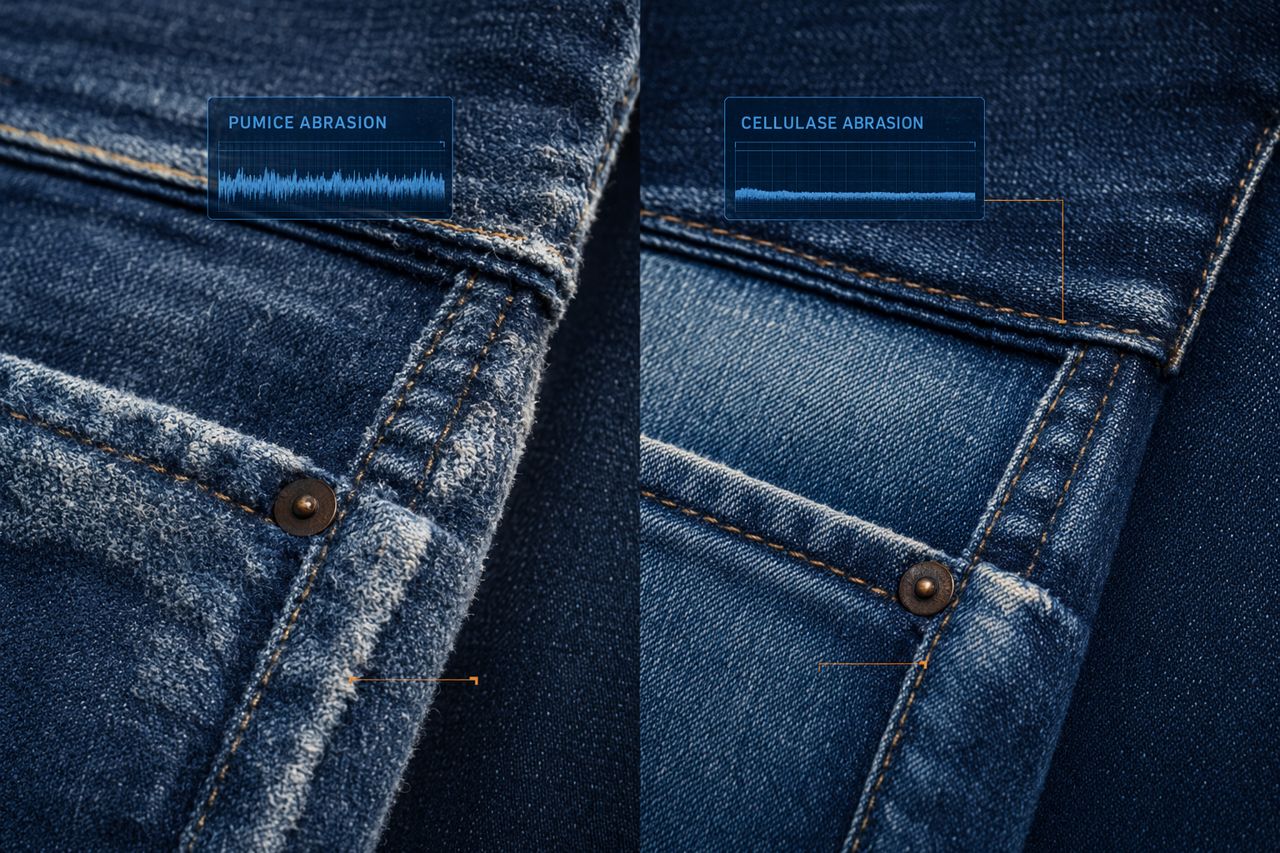
| Traditional pumice | Heavy vintage looks, strong seam abrasion | Familiar abrasion profile and visible highs | Stone damage, sludge, pocket marking, machine wear, handling labor |
| Cellulase-only bio wash | Cleaner controlled fading, pumice-free programs, soft abrasion | Less stone handling, smoother handfeel, improved process cleanliness | Requires tight control of time, temperature, chemistry, and neutralization |
| Hybrid pumice-cellulase | Mills and laundries reducing stones without losing familiar highs | Faster route adjustment, lower stone load, retained mechanical character | Balance enzyme bite with stone action to avoid over-abrasion |
| Low-stone cellulase route | Premium consistency programs and repeat shade production | Better repeatability, reduced waste handling, less fabric damage risk | Needs aligned loading, pH window, anti-backstain support, and rinse control |
Enzymeszone helps laundries choose the route that fits the order book instead of forcing one chemistry across every wash.
What cellulase does in denim bio stone wash
Cellulase acts on exposed cotton fiber at the denim surface. In the right wash window, it helps remove microfibrils, opens down surface fuzz, supports controlled indigo release, and improves fabric handfeel. In production terms, the buyer value is simple:
- More consistent shade movement between batches
- Controlled abrasion without excessive garment damage
- Reduced dependence on high pumice loads
- Cleaner panel appearance with less grey cast risk
- Softer handfeel with better surface clarity
- Route flexibility across medium, dark, and vintage targets
Enzymeszone supplies cellulase options for different denim wash strategies, including routes where backstaining control, temperature flexibility, and cycle discipline matter as much as abrasion.
Backstaining control is part of the route, not an afterthought
Bio stone wash can release indigo quickly. If loose dye is not managed, pockets, weft, and light areas can pick up cast and flatten the finish. Enzymeszone treats backstaining reduction as part of the enzyme program, not a separate troubleshooting step.
For laundries, that means evaluating:
- Enzyme selection against target shade and garment construction
- Dispersing and anti-redeposition support where needed
- Rinse sequence and bath turnover
- Temperature and pH stability during the working stage
- Stop and neutralization timing to protect the shade window
The goal is a cleaner high-low contrast with fewer rejected lots. For the anti-backstain step itself, see back-staining control in denim finishing.
Supply for production laundries and resellers
Enzymeszone works with denim laundries and auxiliary distributors that need reliable supply for repeated orders, seasonal wash programs, and buyer-approved finish standards. Supply can support:
- Ongoing production of approved bio stone recipes
- Trial-to-scale transition for new denim programs
- Pumice reduction projects
- Pumice-free wash development
- Hybrid route optimization for existing machines
- Multi-factory recipe alignment where process windows differ
We focus on the production conversation: what finish you need, how your machines run, where current variation appears, and what chemistry route can reduce rework.
When to review your current stone wash chemistry
A cellulase route review is worth running when your laundry sees any of the following:
- Shade drift between the first and final batches of the day
- Inconsistent seam abrasion after scale-up
- Excessive rewash due to cast, pocket staining, or panel mismatch
- High pumice loss, sludge load, or machine maintenance issues
- Harsh handfeel after aggressive mechanical abrasion
- Limited temperature flexibility across equipment
- Pressure to reduce water, stone handling, or cycle time without losing character
Enzymeszone can help map the practical changeover path instead of disrupting every approved recipe at once.
A production-aware trial path
For a new enzyme program, Enzymeszone recommends a controlled route validation:
- Share fabric details, garment photos, target shade, and current process outline.
- Identify whether the goal is stone reduction, shade repeatability, handfeel improvement, or backstaining control.
- Select a cellulase route for lab dip, pilot machine, or production trial.
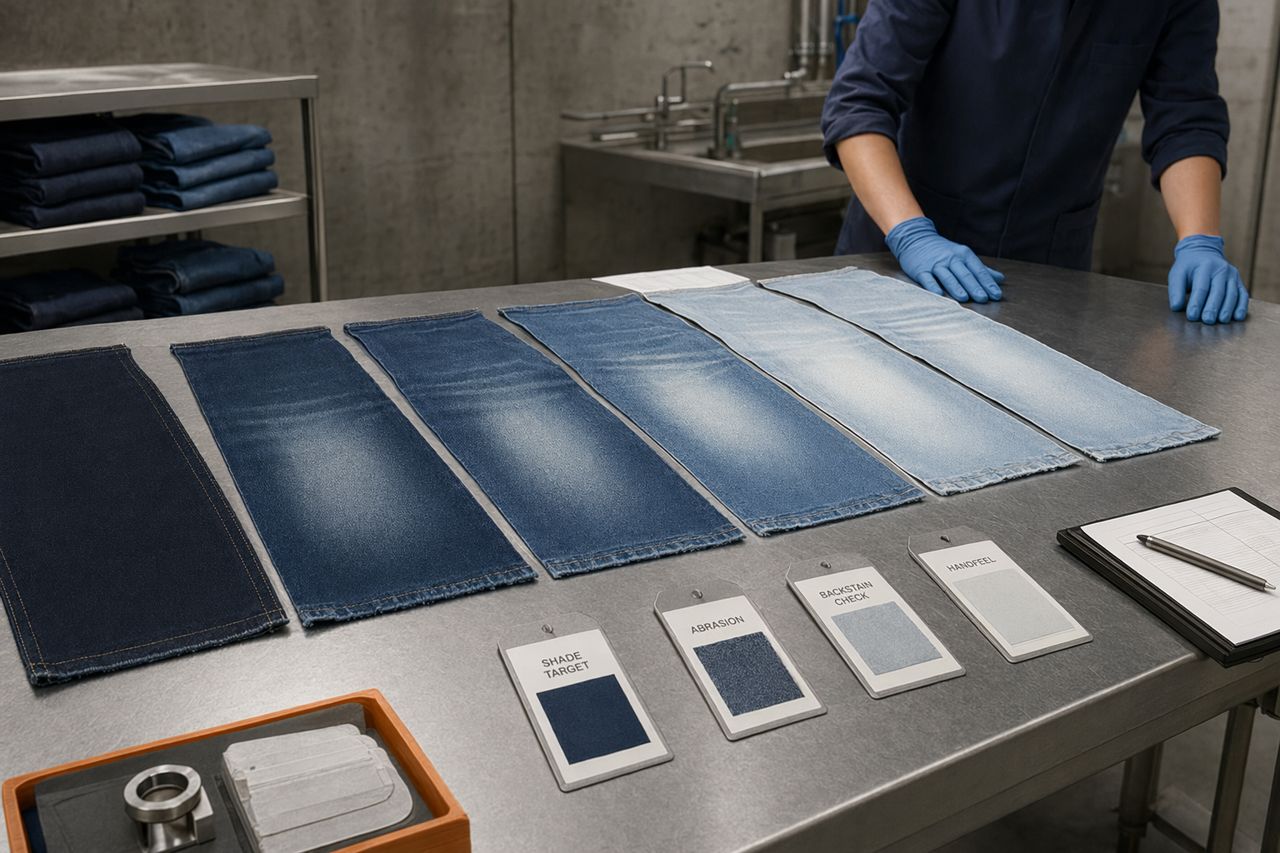
- Compare shade, abrasion, strength retention, pocket cleanliness, handfeel, and rewash risk.
- Lock the operating window, including the enzyme stop, before ordering production quantities.
This keeps the trial tied to plant outcomes rather than chemistry speculation.
Request a quote for wholesale and bulk supply
If your laundry is planning a pumice reduction program, a low-stone route, or a cellulase-only bio stone wash, Enzymeszone can help specify the right enzyme path and quote production supply.
Use the on-site request form and include:
- Product or wash route you need (pumice replacement, low-stone, hybrid)
- Quantity: trial amount and expected monthly volume
- Destination country for delivery
- Denim type, target finish, current wash route and machine type