Denim Laundry Cellulase Supplier Checklist
When a denim laundry qualifies a cellulase supplier, the question is not only whether the enzyme can fade fabric. The question is whether it can help your plant repeat the same finish across bulk lots, seasonal fabrics, machine loads, water conditions, and operator shifts.
RivetTide supplies cellulase solutions for denim laundries that need controlled bio-polishing, abrasion development, backstaining reduction support, and wash-down consistency without turning every new style into a trial-and-error project.
If your team is vetting an enzyme supplier for denim washing, use this checklist before approving a source for production.
What a denim laundry should confirm before approving a cellulase supplier
1. Fit to your finish target
A useful cellulase source should be matched to the finish you actually sell, not a generic lab swatch.
Confirm support for:
- Light, medium, and heavy wash-down programs
- Vintage abrasion targets with controlled seam and edge contrast
- Soft handfeel without excessive fabric strength loss
- Reduced fuzz and cleaner surface appearance
- Lower pumice dependence where the style allows
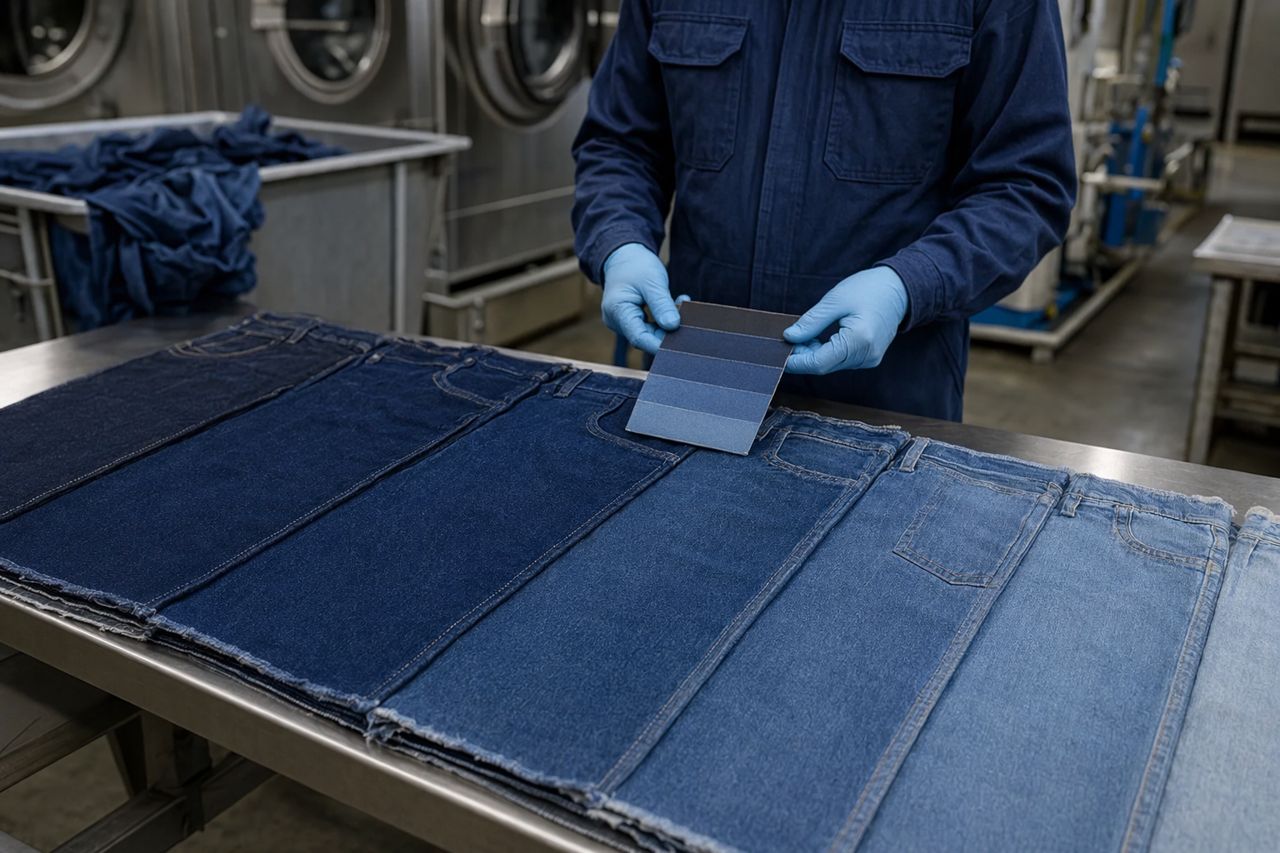
- Shade repeatability between sampling and bulk
RivetTide helps laundry teams select cellulase options by finish route, fabric construction, indigo depth, machine type, and target handfeel.
2. Shade control across bulk production
The right cellulase should support a stable shade window. In denim laundry, uncontrolled enzyme response can shift a clean blue into a dull, over-opened, or uneven shade.
Your supplier should help define:
- Practical dosage bands by wash objective
- Temperature and pH flexibility for plant conditions
- Contact time guidance for abrasion development
- Stop-point control to prevent over-processing
- Compatibility with detergents, dispersants, anti-backstaining aids, and softeners
- Rewash risk factors before scale-up
The goal is not maximum reaction. The goal is repeatable finish control.
3. Backstaining management
Backstaining can erase contrast, flatten cast, and create costly rework. A cellulase supplier should understand how enzyme selection interacts with indigo release, liquor ratio, mechanical action, and rinse design.
Ask whether the supplier can help you reduce:
- Pocketing and panel redeposition
- Dull cast after enzyme wash
- Shade drift between drum positions
- Excessive blueing on lighter target shades
- Rewash caused by inconsistent rinsing or stop control
RivetTide works from the laundry floor backward: target shade, abrasion level, process window, and chemical compatibility.
4. Water-temperature flexibility
Denim laundries do not always run under ideal conditions. Steam availability, seasonal water temperature, machine loading, and scheduling can all affect results.
A production-ready cellulase source should provide operating flexibility across realistic plant windows. That flexibility helps managers protect throughput without sacrificing shade approval.
Look for guidance on:
- Low-to-moderate temperature washing options
- Controlled response at warmer wash temperatures
- Process timing when heat-up rates vary
- Rinse and neutralization sequencing
- Practical adjustments for fabric weight and construction
5. Batch consistency and lot-to-lot reliability
A denim laundry cannot afford a supplier that performs well once and drifts later. Procurement should evaluate the supplier’s ability to deliver consistent commercial batches and clear documentation.
Confirm:
- Lot traceability and retained production records
- Consistent physical handling properties
- Clear storage and shelf-life guidance
- Packaging formats suitable for your dosing practice
- Forecasting support for repeat programs
- Communication before formulation or sourcing changes
Consistency at the supplier level protects consistency at the washer level.
Cellulase selection by denim finishing objective
Clean bio-polish
For cleaner surface appearance and softer handfeel, the cellulase system should reduce surface fuzz while limiting excessive abrasion. This route is useful for premium dark washes, clean mid shades, and styles where fabric strength and cast preservation matter.
Controlled abrasion
For vintage wash-downs, the enzyme needs enough response to open the indigo surface while staying inside the approved shade band. This is where supplier guidance on time, temperature, pH, and mechanical action becomes critical.
Pumice-reduction programs
Many laundries are reducing stone load to lower sludge, garment damage, machine wear, and manual handling. Cellulase can support pumice-free or pumice-reduced routes, but the process must be built around the desired contrast, not just enzyme addition.
Rewash-prevention programs
Rewash is usually the most expensive shade correction. A well-selected cellulase process can help reduce failures by improving control over abrasion rate, backstaining risk, handfeel, and final cast.
Questions to ask a denim laundry cellulase supplier
Use these questions before approving a new supplier for repeat production:
- Which cellulase type fits our target shade, fabric weight, and abrasion level?
- How should we adjust the process for different machine loads and liquor conditions?
- What process window protects shade control without slowing throughput?
- How does the product perform with our detergents, dispersants, anti-backstaining system, and softener?
- What are the main risks for backstaining or over-wash in our route?
- How should sampling be scaled to bulk drums?
- What packaging and storage conditions fit our dosing area?
- How is lot consistency controlled across repeat shipments?
- What lead time and forecast structure is recommended for ongoing production?
- Who supports troubleshooting when bulk shade moves outside the approved band?
What RivetTide supplies
RivetTide supplies cellulase solutions for denim washing programs where production control matters. Our focus is practical: help laundry teams hit approved shades, manage abrasion, improve handfeel, reduce backstaining risk, and prevent unnecessary rewash.
We support:
- Denim cellulase selection for sampling and bulk production
- Acid and neutral process routes where appropriate
- Pumice-reduced abrasion concepts
- Bio-polishing and surface-cleaning programs
- Process window guidance for pH, temperature, time, and compatibility
- Procurement support for repeat supply planning
Why laundry teams choose a production-aware enzyme supplier
A low purchase price does not help if it creates shade drift, slow approvals, extra rinsing, garment damage, or rewash. The right cellulase supplier helps reduce total process risk.
Production value shows up in:
- Fewer rejected batches
- More predictable shade matching
- Cleaner contrast and cast control
- More stable handfeel
- Reduced manual correction
- Better use of machine time
- Clearer procurement planning
Request a quote
If you are sourcing a cellulase supplier for denim washing, send your target finish, fabric type, machine setup, and estimated monthly demand through the request a quote form. RivetTide will review the wash objective and recommend a supply path for sampling or repeat production.